“Be Honest with Yourself”: Experienced Media Professional Osyp Loboda Shares Insights with Students
On November 13, the Journalism Department of Uzhhorod National University (UzhNU) hosted Osyp Loboda — a journalist with many years of experience and an editor of the former regional television and radio company. He dedicated 29 years of his life to the media industry, including 4 years in television and 25 years in radio.
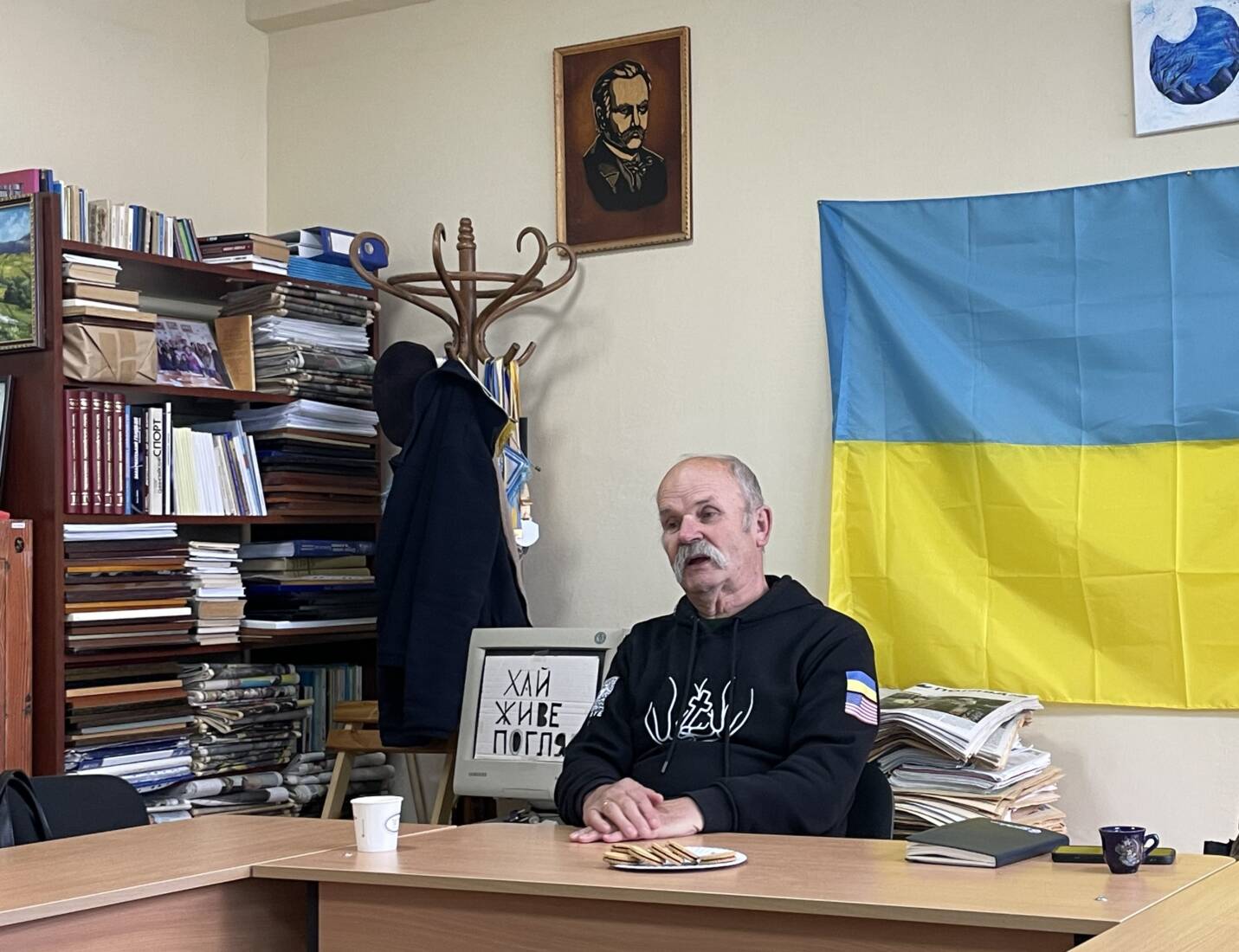
The meeting took place during practical classes in “History of Ukrainian Journalism” and “History of Ukrainian Media Communication,” as well as within the framework of the “Media Perspectives” young journalist press club. The journalist was invited by Associate Professors Volodymyr Tarasiuk and Nataliia Tolochko, who also moderated the conversation.
Osyp Loboda first spoke about his professional path and his first steps in journalism. Even in school, he had a talent for writing, so his abilities and surroundings pushed him toward choosing this profession. After receiving his high school diploma in 1970, Mr. Osyp successfully passed the exams for Ivan Franko National University of Lviv. To enroll in a journalism program at that time, one had to work as a newspaper editor for two years or serve in the army. After university, the media professional already had three years of radio practice in Uzhhorod, so he received a work placement at the regional television and radio company.
When he started working in television, he encountered the censoring of materials. Specifically, a journalistic text went through several stages before going on air. First, the author recorded everything on a microphone and then transcribed the material. Next, the text was typed and handed to the senior editor, who edited it. After that, the text went to the editor-in-chief, and from there to the general director. Three days before the broadcast, the material had to be in the hands of the general director. It was not uncommon to have to cut two or three words from a recorded program, so the cameraman’s skill was also important — knowing what could be cut without losing the meaning and then splicing the film. The text was intentionally edited with a red pen so that the journalist would not repeat their mistakes.
Speaking about the “jammers” of the Soviet period, the journalist noted that he listened to broadcasts of “Voice of America” and “Radio Liberty.” In fact, technical obstacles were not serious for people in Transcarpathia — “the voices” were accessible here. However, foreign media also occasionally manipulated information, likely for propaganda purposes. As a listener, he was outraged by the presentation of unreliable facts about the Chornobyl disaster, where there were allegedly 2,000 immediate deaths and tens of thousands of people with oncological diseases. Correspondents sought to draw the audience’s attention to the tragedy by comparing it to a disaster of similar scale in Japan that occurred during World War II.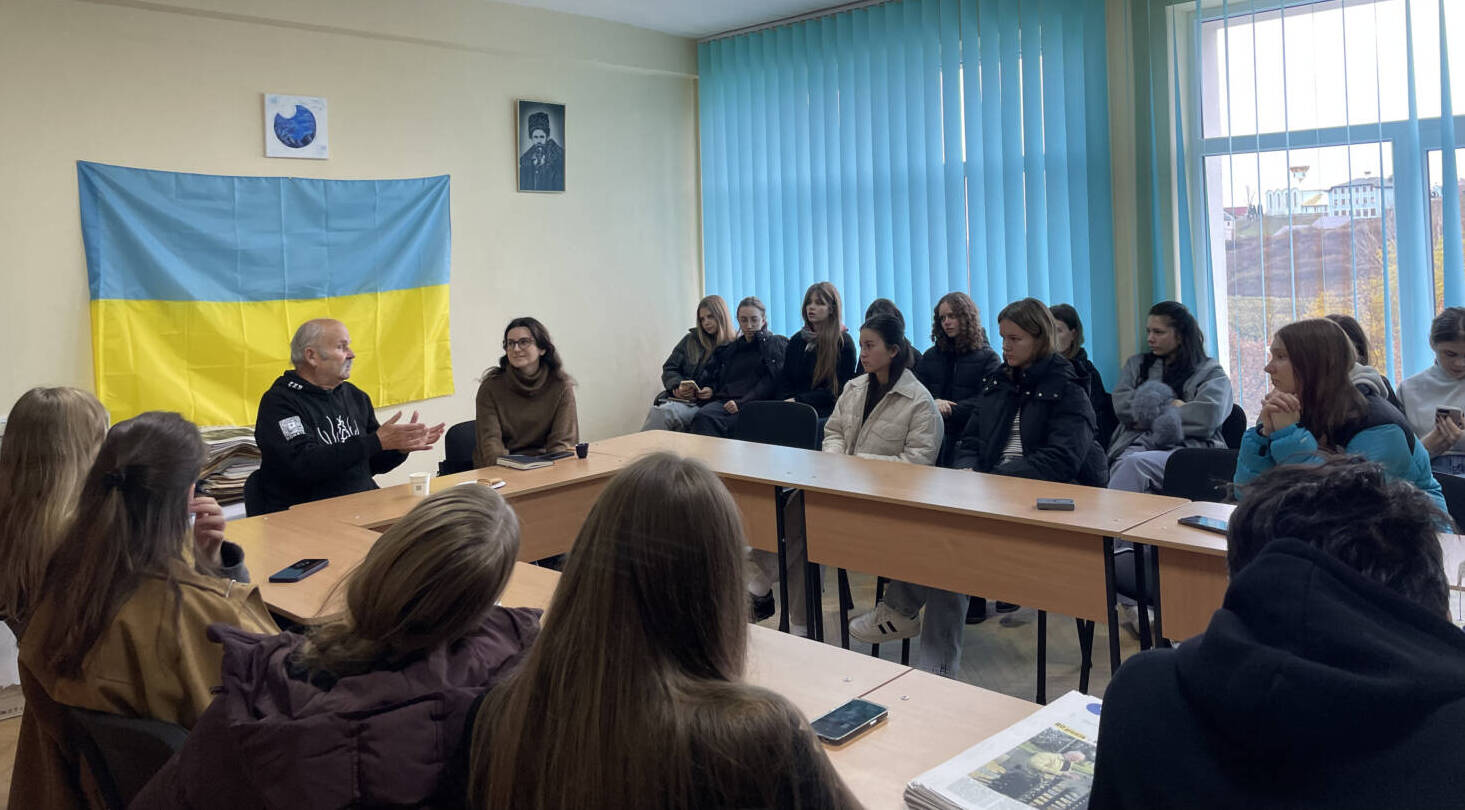
Osyp Loboda worked on radio programs such as “From Heart to Heart,” “People. Destinies. Choice,” and “The West Up Close.” He loved the latter most of all, as he communicated in it with Ukrainians who came from abroad. He also loves to travel himself. He shared memories with students about Japan, which he visited for work during the Soviet period. The impressions were so strong that, according to Mr. Osyp, he had “vivid colorful dreams” for several weeks afterward ☺.
The journalist remembers the period of the late 1980s and early 1990s well. In Transcarpathia, the construction of the Pistryalovo Radar Station began — a station whose beam reached South America and Argentina. A session of the regional council was held regarding this, where the chairman of the regional council spoke. The journalist received an order to broadcast his entire speech on the air. But Osyp Loboda refused. Generally, he had the image of a rebel at the regional television and radio company. Once he prepared a report from a patriotic rally, but mentions of blue-and-yellow flags and slogans were crossed out of the text, so the media professional refused to release it on air. Back in the Soviet period, due to such instances of disobedience and “violation of discipline,” he was encouraged to transfer from the television editorial office to the radio office.
– I left television out of principle, and then I grew fond of radio. There I am dependent only on myself, except perhaps for the technician who had to clean the tape. In television, I depended on the cameraman who films, the director who edits, and the announcer who reads the text. You were the first to write the material, but, essentially, the last in that chain.
To be able to talk on air about real events in Transcarpathia, in the early 1990s, he collaborated with the independent radio station “Uzhhorod-Contact.”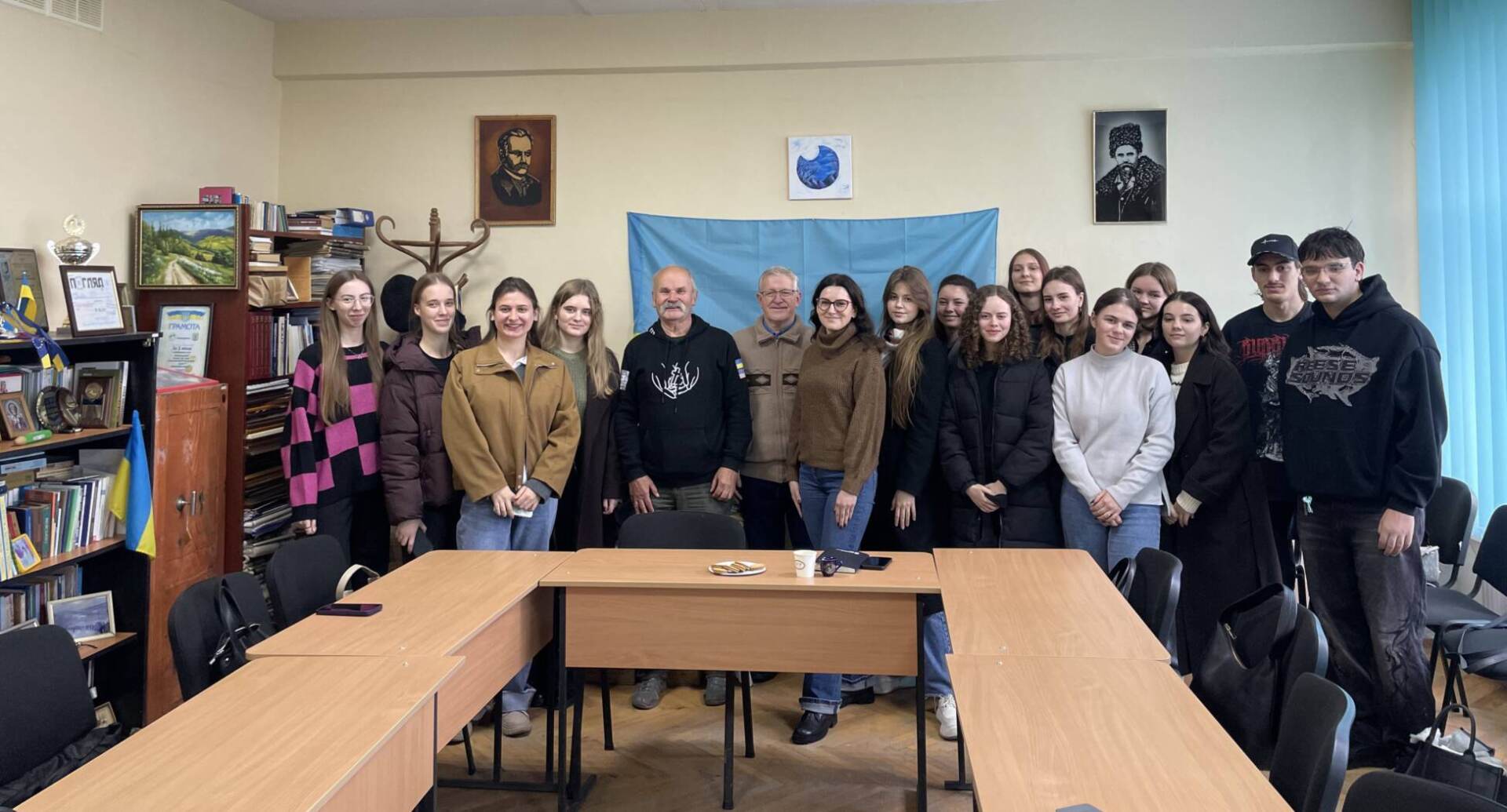
In modern journalism, Osyp Loboda is annoyed by clickbait headlines, manipulations, and violations of standards, so he advised future journalists: – Be honest with yourself and before those whom you inform, because the worst thing is when a person starts selling themselves.
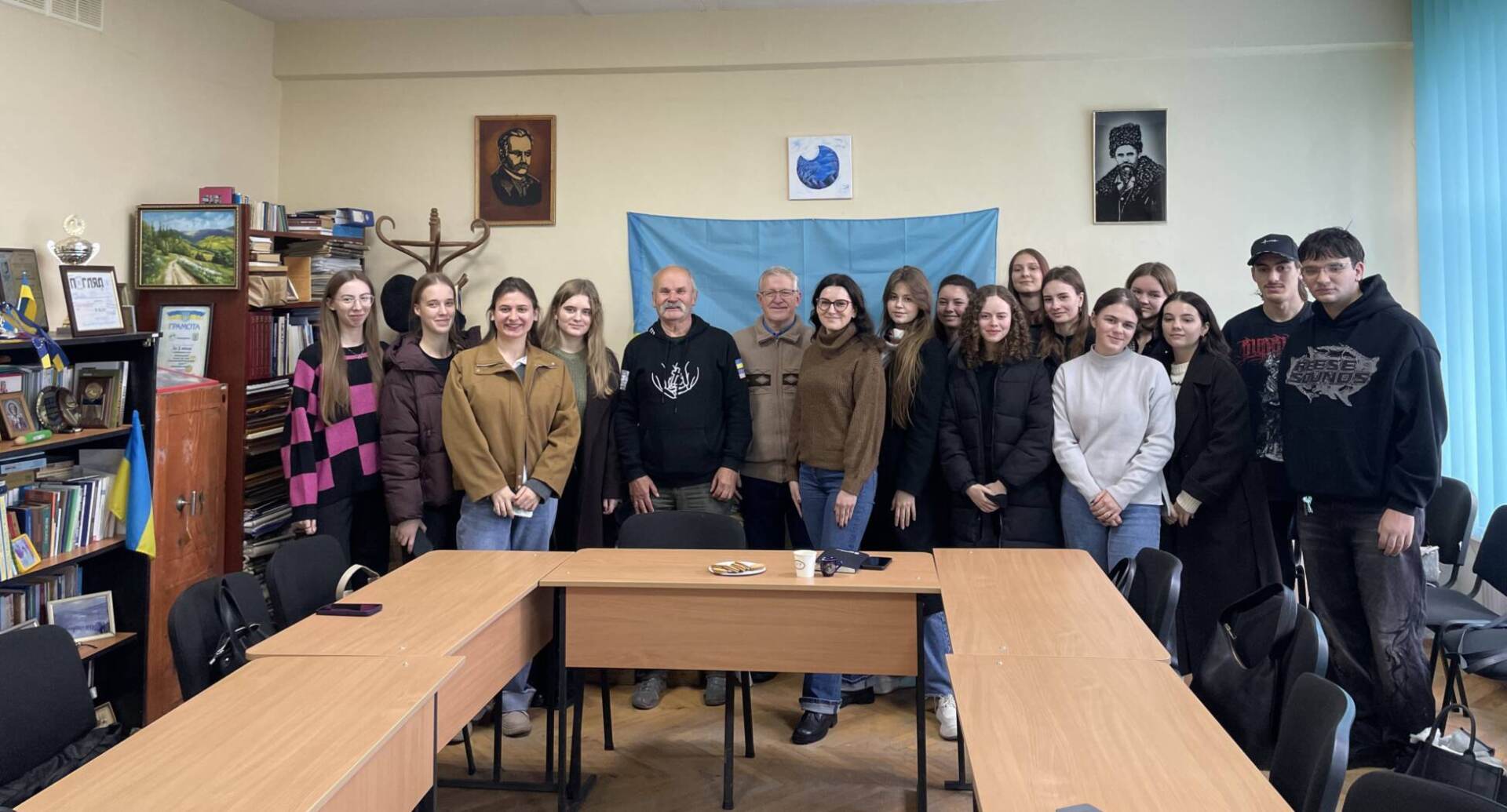
The meeting ended with a group photo for memory.
Kseniia Riaboi, student of the “International Journalism” program